
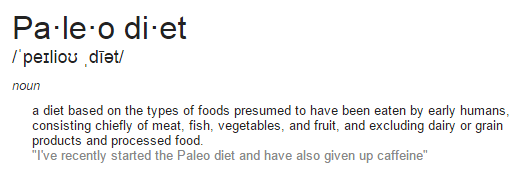
For those following the Paleo lifestyle, it can be a little frustrating trying to explain what it is to our friends and family. Sometimes, it almost feels like a deviant lifestyle pretty much the same way people view BDSM — alternately fascinated by it and yet without much understanding. So let me attempt to explain what this Paleo version of “50 shades” really is and how it is not on an alternate universe from what is considered “mainstream” food.
If you google “What is Paleo”, you’ll probably turn up a definition much like the above. So really, if you are on the Paleo diet, you eat fruits, vegetables, meat , fish…oh wait a minute…that sounds pretty much like what everyone else eats. It excludes dairy grain & processed food, which isn’t that much different as when someone says they don’t eat seafood because they have an allergy or they just don’t like to eat it. There, so now that I’ve clarified that we eat pretty much what is considered “mainstream” food, we can stop acting as if the cavemen diet came from Mars. For those who want a more detailed list of foods on the Paleo diet, there are a number of online resources like this one – What to eat on the Paleo diet.
But what is the rationale behind the caveman diet? Why exclude grains, dairy or processed food? The belief is that genetically, humans were not designed by nature to eat grains, dairy or processed food. Historically, as hunter-gathers, the main source of food was fruits, vegetable, meat, fish. Grains and dairy is a product of agriculture and farming, while processed food is a product of industrialization, all man-made inventions, rather than creations of nature. And it is believed that this reliance on grains, dairy & processed food has led to many of today’s health problems. The Paleo Diet is an effort to go back to eating how we’re biologically designed to eat, allowing us to tap into our genetic potential and start living healthier immediately.
To me, the key difference is the cutting of sugar and processed food from your diet. If you have read the articles detailing the adverse effects of sugar on health, versus the benefits of cutting sugar from your diet—lose weight, healthier heart, reduce risk of diabetics—it seems like a pretty good reason to do so. And processed food, where shall I even start? Read the labels and if you can’t recognize more than half the chemicals in there, should we be putting that in our bodies? In fact, even if you can recognize the chemicals, do we really want to put chemicals in our body?
To be realistic, I think different people follow the lifestyle with varying degrees of compliance. There are the purists who follow it to the T—grassfeed meat, sustainably caught seafood, raw organic produce—then there are the many other shades of grey in between, who follow the broad principles and adapt depending on the food sources available.
So, what does this all mean in a typical day? Here’s a peep at some of the paleo-friendly meals I’ve had. Seems pretty “mainstream” and just “plain vanilla” right?


So the next time someone you know tells you that they are following the Paleo lifestyle, no need to look at them like they just told you that they practice bondage. All they said was “I prefer to eat fresh fruits and vegetables, meat and seafood, sourced and grown as naturally as possible.” And for the adventurous, why not give it a try too? I promise you that it’s all pleasure, pain is optional and only if it is safe, sane and consensual.
If you’ll like to join our Paleo-friendly cooking classes or to include some Paleo-friendly treats for your next party, drop us an email at info@cookin-lab.com or message us on our Cook In:Lab Facebook page.
 Cook In:Lab