Going grain-free in Asia

Since my 50 Shades of Paleo article, I’ve had friends who are interested in trying out the diet ask me for meal ideas, in particular Asian paleo-friendly meals. Most of the paleo recipes I’ve seen out there tend to be western-style meals, although I have come across a few resources with Asian recipes as well.

It can be a little challenging to enjoy a typical Asian meal on a paleo diet, mainly because rice and noodles make up a large proportion of our staples in Asia. However, if you understand the underlying principles of a paleo diet, you can make simple adjustments to your meal that will allow you to “have your cake and eat it too”. So, to help you out, I’m going to outline a few substitutes you can use on a paleo diet to replace the grains in your meals.

How to break our deeply engrained rice culture

Grown in Asia for at least 10,000 years, rice has richly influenced the cultures and lives of billions of people. Over 90 percent of the world’s rice is produced and consumed in the Asia-Pacific Region. That means that almost all the meals we eat in Asia ask for some form of rice or its product. And since the paleo diet avoids the consumption of grain, rice is not on its recommended food list. What then?

Enters the cauliflower–a well-documented paleo-friendly substitute for rice. To use it as a rice substitute, you need to cut your raw cauliflower into pieces, then pulse it gradually in your food processor until it resembles rice grain. Once you have your cauliflower ‘grains”, you can make steamed “rice” to eat with your dishes or use it as a base for fried rice (here’s an easy receipe for fried rice on the Paleo Magazine).

The art of noodle making, paleo-style

It is widely believed that the noodles were first invented in China, slowly spreading to other parts of Asia like Japan and Korea because of travel and trade. After thousands of years of evolution, each country in Asia has developed their own recipes for noodles. But, as you know, most noodles are made from either wheat flour, rice flour, mung bean starch, big no nos while on the paleo diet. Does that mean that our noodle eating days are over?

Not quite because there are a number of substitutes for noodles on the paleo diet. This includes the use of vegetable noodles, which you can create using a spiralizer or a julienne peeler. Common vegetable noodles include zucchini, carrot, parsnip, turnip, sweet potatoe, squash, and broccoli. The list goes on depending on how creative you want to be with your vegetable selection.

Other options include this paleo-friendly pasta recipe which I found on the Paleo Cupboard. Instead of wheat flour, they use tapioca flour and almond meal as the base. I’ve found that it produces noodles that are very close to the original.

Alternatively, if you are familiar with how to make traditional Hakka Yam abacus seed, this is actually a paleo-friendly recipe which you can utilise for noodles. I’ve also used the same recipe with sweet potato instead of yam to create sweet potato noodles.

Kelp is also commonly used to make kelp noodles or you can also purchase kelp noodles online at iHerb. And, I’ve recently found a Korean sweet potato noodles at NTUC Fairprice, with the texture of glass noodles, which you can also use in your noodle dishes.

So as you can see, going grain-free in Asia isn’t really as hard as you think. You can still cook most of your usually Asian recipes by using rice or noodle substitutes that are grain-free and paleo-friendly. It doesn’t require a total revamp, just a little creative adjustment. So, why don’t you unleash a little creativity in your own kitchen and make your own grain-free meal today?
50 shades of Paleo

Paleo

For those following the Paleo lifestyle, it can be a little frustrating trying to explain what it is to our friends and family. Sometimes, it almost feels like a deviant lifestyle pretty much the same way people view BDSM — alternately fascinated by it and yet without much understanding. So let me attempt to explain what this Paleo version of “50 shades” really is and how it is not on an alternate universe from what is considered “mainstream” food.

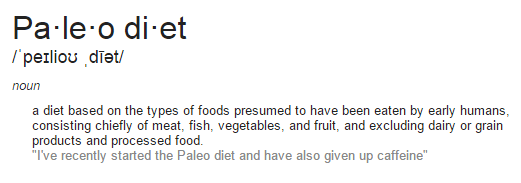
If you google “What is Paleo”, you’ll probably turn up a definition much like the above. So really, if you are on the Paleo diet, you eat fruits, vegetables, meat , fish…oh wait a minute…that sounds pretty much like what everyone else eats. It excludes dairy grain & processed food, which isn’t that much different as when someone says they don’t eat seafood because they have an allergy or they just don’t like to eat it. There, so now that I’ve clarified that we eat pretty much what is considered “mainstream” food, we can stop acting as if the cavemen diet came from Mars. For those who want a more detailed list of foods on the Paleo diet, there are a number of online resources like this one – What to eat on the Paleo diet.

But what is the rationale behind the caveman diet? Why exclude grains, dairy or processed food? The belief is that genetically, humans were not designed by nature to eat grains, dairy or processed food. Historically, as hunter-gathers, the main source of food was fruits, vegetable, meat, fish. Grains and dairy is a product of agriculture and farming, while processed food is a product of industrialization, all man-made inventions, rather than creations of nature. And it is believed that this reliance on grains, dairy & processed food has led to many of today’s health problems. The Paleo Diet is an effort to go back to eating how we’re biologically designed to eat, allowing us to tap into our genetic potential and start living healthier immediately.

To me, the key difference is the cutting of sugar and processed food from your diet. If you have read the articles detailing the adverse effects of sugar on health, versus the benefits of cutting sugar from your diet—lose weight, healthier heart, reduce risk of diabetics—it seems like a pretty good reason to do so. And processed food, where shall I even start? Read the labels and if you can’t recognize more than half the chemicals in there, should we be putting that in our bodies? In fact, even if you can recognize the chemicals, do we really want to put chemicals in our body?

To be realistic, I think different people follow the lifestyle with varying degrees of compliance. There are the purists who follow it to the T—grassfeed meat, sustainably caught seafood, raw organic produce—then there are the many other shades of grey in between, who follow the broad principles and adapt depending on the food sources available.

So, what does this all mean in a typical day? Here’s a peep at some of the paleo-friendly meals I’ve had. Seems pretty “mainstream” and just “plain vanilla” right?

So the next time someone you know tells you that they are following the Paleo lifestyle, no need to look at them like they just told you that they practice bondage. All they said was “I prefer to eat fresh fruits and vegetables, meat and seafood, sourced and grown as naturally as possible.” And for the adventurous, why not give it a try too? I promise you that it’s all pleasure, pain is optional and only if it is safe, sane and consensual.

If you’ll like to join our Paleo-friendly cooking classes or to include some Paleo-friendly treats for your next party, drop us an email at info@cookin-lab.com or message us on our Cook In:Lab Facebook page.

Healthy eating can be convenient too

VeggieBasket

I was just commenting to a friend the other day that working life in Singapore is hard on the body. What do I mean by that? Most desk-bound jobs require at least 8 hours sitting in front of a computer, hunched over (often in an unnatural body position) and doing a series of repetitive actions. It’s little wonder why we come away from a day’s work with aches all over the body. Add on to the fact that most jobs require an extraordinary amount of overtime, which in turn means less time for the outdoors or in fact, any type of exercise, unless you count walking to the water cooler or toilet as exercise. Not to mention that with this hectic schedule, eating healthy is practically non-existent. With the high amount of stress involved, you end up with insufficient time for proper meals and when you do get to eat, you binge on unhealthy, and more often than not, fast food – otherwise known as “revenge eating” (as one of my girlfriends puts it).

I’ve been following the Paleo diet for a while now, and while I’m not 100% Paleo, with the opportunity to cook most of my own meals, I’ve had the chance to keep it a little closer to heart. However, in the last two weeks, with my current 8.30am – 6pm schedule, I’ve been eating out most of the time. And I can already feel the effects of this short period of convenience food – bloating, sluggishness, less energy…the list goes on. What a huge difference it makes on your body, to be able to enjoy home-cooked meals versus the carb-loaded, sugar-laden fare available outside.

Just last weekend, I had the opportunity to conduct a cooking class for some friends, who, like most of us, work at jobs with little time to prepare their own meals. Hence, to address the challenges presented by our tight schedules, the theme of the class was “Paleo-friendly meals in 30 mins”, broken down into 3 recipes guaranteed to take you from breakfast to dinner. The whole objective was to show how easy it can be to prepare a tasty, healthy, home-cooked meal in just 30 mins (start to finish) that does not have to be laden with sugar, carbohydrates, processed food and seasoning. All fresh ingredients, the more natural, the tastier it is. You can see the delicious results for yourself. None of these recipes take more than 30 mins to prepare.

Photo Credits: Courtesy of Kimberly Kwek & Tay Sok Hui

There are plans for more of such Paleo cooking classes. But in the meantime, I wanted to share some tips that I use to try to eat healthier, even with a busy work schedule. Most of us reach for convenience food because it is fast, easy and readily available. So the trick to eating healthy is to make sure that these healthier options are easily and readily available. Here are 5 tips I use:

Keep soup stock on hand
What I like to do is to make my own stock ahead of time on a weekend. Just take chicken or pork bones, even prawn shells, or fish bones, boil it for a few hours with vegetables and then freeze it in smaller containers. When I need the stock, I can take it straight from the freezer to the pan. No need to use stock cubes or stock in a can. This is all natural goodness in an instant.

Marinate your meats ahead of time
I’ll usually plan ahead for the week and marinate a few types of meat on the weekend. Then, I can just pull the meat out of the fridge, almost straight onto the pan, when I get back from work.

Keep these vegetables handy
There are a few staples I usually have in my fridge, which makes for a great pairing with the protein in the meal. Plus, they keep fresh a lot longer than most greens. I’m not advocating that you only eat these vegetables but that these are option that are handy to have.

  • Tomatoes – great for sauces or salads
  • Carrots – great for sauces, salads & stews
  • Zucchini – great as a noodle substitutes or for use in stews
  • Sweet Potato – great substitute for regular mash or fries
  • Cauliflower – use it for rice substitute or even as a pizza base
  • Broccoli –  good source of nutrients and vitamins & pairs with most meats
  • Garlic & Onions – these aromatics are a base for most meals. I have never cooked any savoury dish without one or the other.

It’s all about herbs
This is the source for a lot of the flavour in your meals. If you can get fresh herbs, that’s the best option but otherwise, I always have a drawer full of dried herbs. You cannot cook anything without herbs. A trick to keeping fresh herbs on hand, is to freeze it in ice cubes with some olive oil. That way, your fresh herbs will keep for slightly longer.

Prepare breakfast the night before
Breakfast is the most important meal of the day (or so they say) and yet, it’s the one we have the least time for. One way to get round it is to prepare your breakfast the night before. Bake some paleo-friendly muffins, or make boiled eggs, or sweet potato patties, then just pop it in the oven the next day to heat up for breakfast. Or better yet, pack a raw fruit/ vegetable box and eat it on your way to work. You can even make a batch of nuts granola and eat that the next day with some organic milk or almond milk.

BONUS TIP: The slow cooker is your best friend
The genius of the slow cooker is vastly underrated. It’s the best piece of cooking equipment for busy working adults. You want breakfast? Pop some ingredients in the slow cooker before bed, viola, hot breakfast when you wake. Want a hot dinner straight after work? Throw some ingredients in the pot in the morning and again, you get to enjoy a hot dinner as you step in the door. Just be careful to put it on low and to put in enough liquid so it doesn’t dry out too soon.

I’ll be utilizing these tips over the next few weeks so do check back in for the fruits of my labour. And as always, if you have any questions, or if you’ll like to share how these tips are working out for you, just post a comment below.

If you’re interested to join in the next cooking class, drop us an email at info@cookin-lab.com or message us on our Cook In:Lab Facebook page

Keeping it simple

KISS

I’m sure many of you have seen a number of food hacks, 2 or 3 or 4-ingredient recipes that have been circulating around the Internet. Personally, I love reading these as some of them are so amazingly creative. And really, if I can get the same taste in 2 steps rather than 10, why not? Oh, I know what some of you are thinking, good food needs time to develop flavour and kitchen artistry cannot be rushed or shortcut, so how can food hacks or 2-ingredient recipes be any good. Like most things, there is a time and place for everything. Good food does not always mean that you have to spend hours slaving in the kitchen labouring over 100 steps food preparation. Sometimes, the best things are the simplest. (Of course, it doesn’t mean substituting steps with highly processed ingredients like cake mix – what sacrilege!)

Keeping to simple food preparations and using natural, fresh ingredients is the premise of many of today’s health food movements, like Paleo or “caveman” diet, whole food, real food or clean eating diets. And really, with fresh, natural ingredients, you don’t need to over-complicate the cooking process. The aim is to keep as much of the natural flavour as possible and hence, reap the maximum health benefits from consuming those food. So, what better reason to support a few food hacks or 2, 3, or 4-ingredient recipes than that? So, instead of breaking out your bag of chips or cookies or sweets, here are 5 healthy food hacks to try for the new year:

Portobello Baked Egg [GF, PF]

Portobello Baked Eggs
[Gluten-free, Paleo-friendly]

  1. Clean the portobello mushroom caps, remove the stem and scrape out the gills so you have a pocket for the egg.
  2. Brush a little olive oil on the outside of the mushroom. Arrange the caps on a baking sheet.
  3. Crack each egg into a small bowl and carefully slide it onto the mushroom cap.
  4. Season to taste with salt, pepper & herbs.
  5. Carefully place the baking pan into the pre-heated 180 degree celsius oven and bake for 10-20 minutes. The amount of time required depends on how thick your mushrooms are and how you like your eggs.

CoconutDate

Coconut Date Cookies
[Gluten-free, Paleo-friendly, No refined sugar, Dairy-free]

  1. Combine 2/3 cups of pitted organic dates with 1.5 tablespoons of organic coconut butter and a pinch of salt in a blender.
  2. Blend till the ingredients are well combined but still slightly chunky.
  3. Make into small balls or cut into bars.
  4. For extra texture, you can coat it in toasted organic coconut flakes.

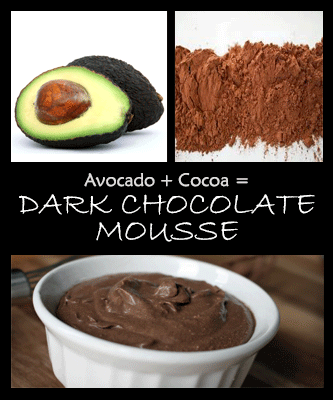
AvocadoChocolate

Chocolate Mousse
[Gluten-free, Paleo-friendly, No refined sugar, Dairy-free]

  1. Cut 2 ripe avocados in half and remove the stone. Scoop the flesh into the large bowl of a food processor.
  2. Add 1/4 cup of organic raw cocoa powder and 1 tablespoon of raw organic honey.
  3. Blend till well combined and creamy.  Spoon into serving glasses or dishes. Serve with fresh fruit.

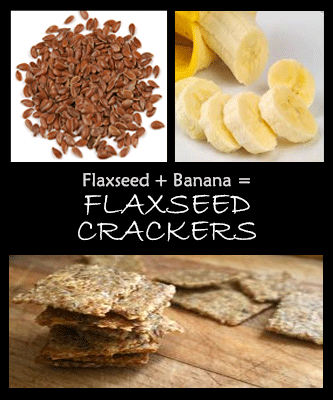
FlaxseedBanana

Flaxseed Banana Crackers
[Gluten-free, Paleo-friendly, No refined sugar, Dairy-free]

  1. Mash 1 extra ripe banana with a spoon until its creamy with few lumps. Add the 1/2 cup flax seeds and mix well.
  2. Grease a baking sheet with olive oil, drop 1 tablespoon size mix onto the tray and press it flat.
  3. Bake for 20 minutes on 150 degrees celsius or until the edges are brown and the tops are hard.

AlmondBanana

Almond Banana Ice Cream
[Gluten-free, Paleo-friendly, No refined sugar, Dairy-free]

  1. Peel 4 ripe bananas and slice into 1/2 inch discs. Arrange banana slices in a single layer on a large plate or baking sheet. Freeze for 1-2 hours.
  2. Place the frozen banana slices in a food processor. Puree banana slices, scraping down the bowl as needed. Puree until the mixture is creamy and smooth.
  3. Combine 2 tablespoons of organic almond butter to the puree. Serve immediately for soft-serve ice cream consistency. If you prefer harder ice cream, place in the freezer for a few hours and then serve.

If you liked this post, leave us a comment below. If you’ll like us to help with the planning for your next party, just contact us for a discussion.

How sustainable is a farm-to-table lifestyle in Singapore?

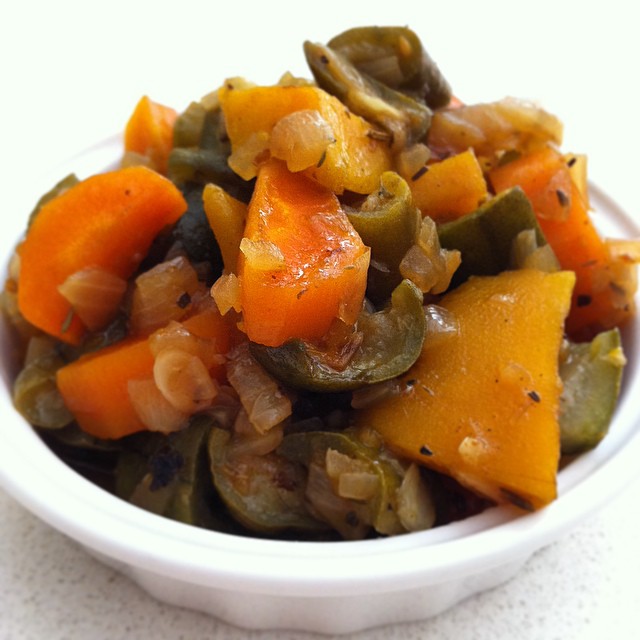
My ratatouille inspired farm-to-table lunch of organic greens

My ratatouille inspired farm-to-table lunch of organic greens

Farm-to-table (or farm-to-fork), one of many food movements in today’s health conscious culture, focuses on producing food locally and delivering that food to local consumers. It is often associated with organic farming initiatives, sustainable agriculture, and community-supported agriculture. While it has been gaining popularity in other parts of the world, in Singapore, this is still largely unheard of among most of the locals.

Little surprise there since according to AVA, Singapore imports some 90% of our food. According to AVA’s statistics, as of 2013, we only have 243 licensed farms, 675 ha. of farmland and we produce a total of S$242.3 million worth of food from our farm production. This is a mere drop of water in the vast ocean, needed to feed some $5.4 million hungry mouths (Singapore’s Population Statistics).

Yet, at the same time, I am equally impressed by the amount of food that we are already producing locally, given how little land we possess. According to the World Bank, Singapore’s population density in 2013 stands at 7,713 people per square metre. That makes us the 3rd most densely populated country in the world, behind Macao (18,942/sqm) and Monaco (18,916/sqm).

For many Singaporeans, the fact that we are producing that much food from our local farms, will probably come as a surprise as well. Most of us spend our days in our offices and have never or rarely seen a farm in Singapore. Our food comes from the supermarket, pre-packed. So what you don’t see, generally doesn’t exist (at least in our own minds).

Last week, I wrote about the Kranji Countryside, where we can find a number of our local farms. While it makes for a nice weekend outing, it is not always practical or easy to buy your fresh produce directly at the farm everyday or every week. However, the good news is that most of these farms offer home delivery and some are even distributed at our local supermarkets. So, if you want a convenient way to enjoy fresh organic farm produce in the comfort of your own home, you can.

To make it easier, here’s a quick summary of some of the farm-to-table options (with delivery or a supermarket presence) available in Singapore:

  • Fire Flies Health Farm: Buy organic vegetables & fruits at the farm or online.
  • Quan Fa Organic Farm: Buy organic vegetables & fruits at the farm or online.
  • Aero Green Tech: Their Aeroponic vegetables are available at local supermarkets like NTUC & Cold Storage.
  • Green Circle Eco Farm: Buy vegetables & fruits (grown without the use of any artificial chemical or pesticide) online.
  • Kin Yan Agrotech: Buy organic wheatgrass at the farm or online. Their range of organic wheatgrass is also available at NTUC, super markets and health food stores.
  • Hay Dairies: Buy fresh goat’s milk (free from antibiotics, preservatives & growth hormones) at the farm, online or at specific distributors islandwide.
  • JFF Pte Ltd: Buy frogs, crocodile meat & fish (free from antibiotics, hormones or steroids) at the farm or online.
VeggieBasket

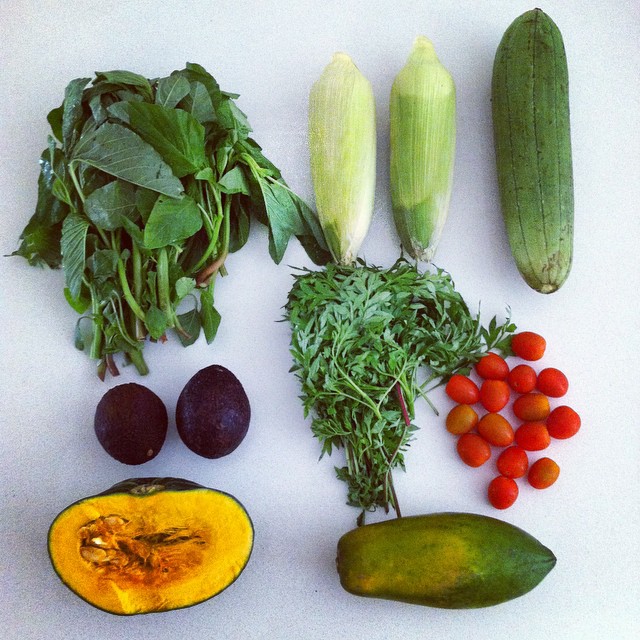
The exciting reveal of my veggie basket from Green Circle

I had a chance to test out the delivery services from Green Circle Eco Farm recently. They offer a Veggie Basket of seasonal vegetable. Each basket costs $30 (with an additional $5 for delivery) and contains approximately 7 types of vegetables or fruits.

For those who do not wish to select your own vegetables from their list or who love surprises, this is a good option to go for. Home deliveries are currently made from 2 – 10pm on Wednesdays (East of Singapore), Thursdays (Central area) and Fridays (Western side of Singapore) only. The only issue I had was I didn’t know what time I would receive my delivery. In this case, I received my basket on Wednesday at 8pm (I stay in the Siglap area) and from what I understand, subsequent delivery will be at a similar time.

It was quite exciting to see what was included in the basket. However, if you wish to maximise your grocery budget for the week, it is perhaps best to pick your own vegetables. And while organic vegetables are indeed a little more expensive, it doesn’t have to break your bank or exceed your weekly expenditure. Here’s a quick cost comparison as an illustration:

 Organic  Non-Organic
Cai Xin (250g)  $2.50  $2.04
Kai Lan (250g)  $2.50  $2.38
Xia Bai Cai (250g)  $2.50  $1.88

Surely, a small price to pay to know that the food you are eating is free from artificial harmful substances. While you may not be entirely convinced yet, at least consider giving it a try. After all, increasing the demand for organic farm-to-table produce may in the long run mean a better price for consumers and a cleaner lifestyle for all.

Check back for some budget farm-to-table recipes that you can cook at home, which I will be sharing over the next few weeks.

To find out how you can support the farm-to-table practice at your next party, contact us for a discussion.